
A Schengen visa itinerary is the travel plan you submit with your visa application: your flights, where you will stay, and what you plan to do, laid out in date order. It helps the consulate see that your trip is realistic, fits inside the dates you are requesting, and ends with you returning home.

What Is a Schengen Visa Itinerary?
The word "itinerary" gets used for two different things in Schengen applications, and mixing them up causes confusion:
- The flight itinerary: a document showing your entry and exit flights. We cover this in detail in our guide to the flight itinerary for a Schengen visa.
- The travel itinerary: the wider plan covering your route, accommodation and activities. This is what this guide is about.
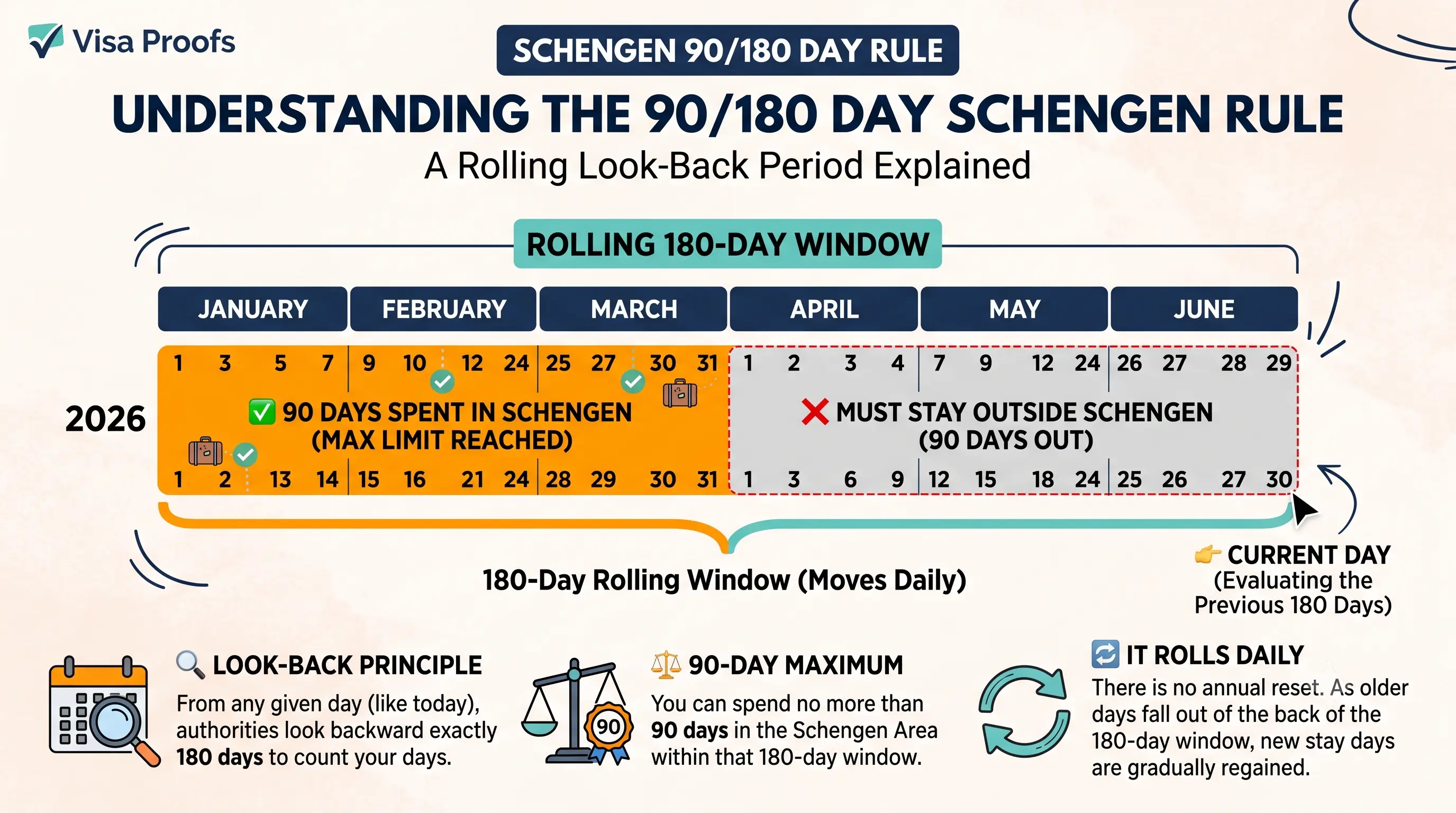
The Schengen area covers 29 countries that apply the same visa rules, and a short-stay visa allows up to 90 days in any 180-day period (European Commission: EU visa policy). Your itinerary shows how you intend to use that time.
What a Schengen Itinerary Usually Includes
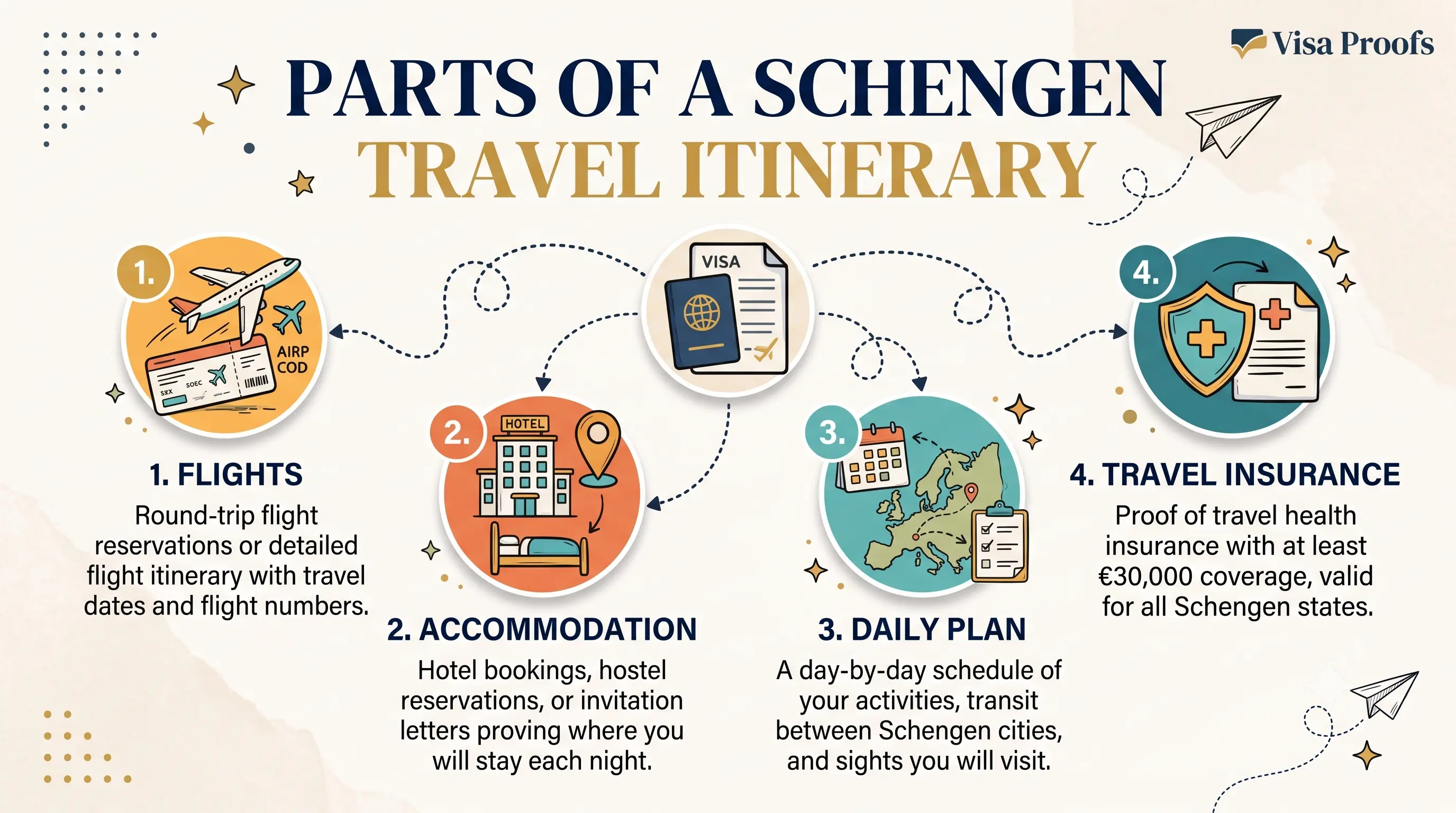
The European Commission lists the standard supporting documents as evidence of the purpose of your stay, your financial means, your accommodation, and your intention to return home, along with medical insurance (European Commission: applying for a Schengen visa). Consulates can also ask for additional documents. In practice, an itinerary pulls several of these together:
| Part | What it shows | Worth knowing |
|---|---|---|
| Flight reservation or itinerary | Your entry and exit dates and route | Dates must match your application form |
| Accommodation | Where you will stay on each leg of the trip | Consider bookings you can cancel without charge, since the visa decision comes first |
| Day-by-day plan | Cities and main activities in order | Shows the trip is realistic for your dates |
| Travel medical insurance | Emergency medical cover for the whole stay | Must cover your full stay in all Schengen countries; the usual minimum is €30,000 |
| Funds and purpose of visit | Why you are travelling and how you will pay | Supported by bank statements and your cover letter |
On the flight part: the EU lists evidence of your intention to return home among the supporting documents, and a return flight reservation is one common way applicants show this. Consulates differ in what they accept, so always check your own consulate's checklist. If you are unsure whether you need a reservation or a paid ticket, read our guide to flight reservation vs flight ticket.
How to Prepare Your Schengen Itinerary, Step by Step
- Fix your dates. Choose your arrival and departure dates, and keep the total within 90 days in any 180-day period.
- Choose your main destination. You generally apply to the consulate of the country where you will spend the most nights. If your time is split equally, it is generally the country you enter first.
- Map your route. List each city in order, with the dates you arrive and leave.
- Sort your accommodation. Match each leg of the route to a booking, or to a host's details if you are staying with someone.
- Get your flight document. Your entry and exit flights should match the route and dates exactly. You can generate a flight reservation for this step.
- Write the day-by-day plan. Keep it realistic: a handful of main activities per city is enough.
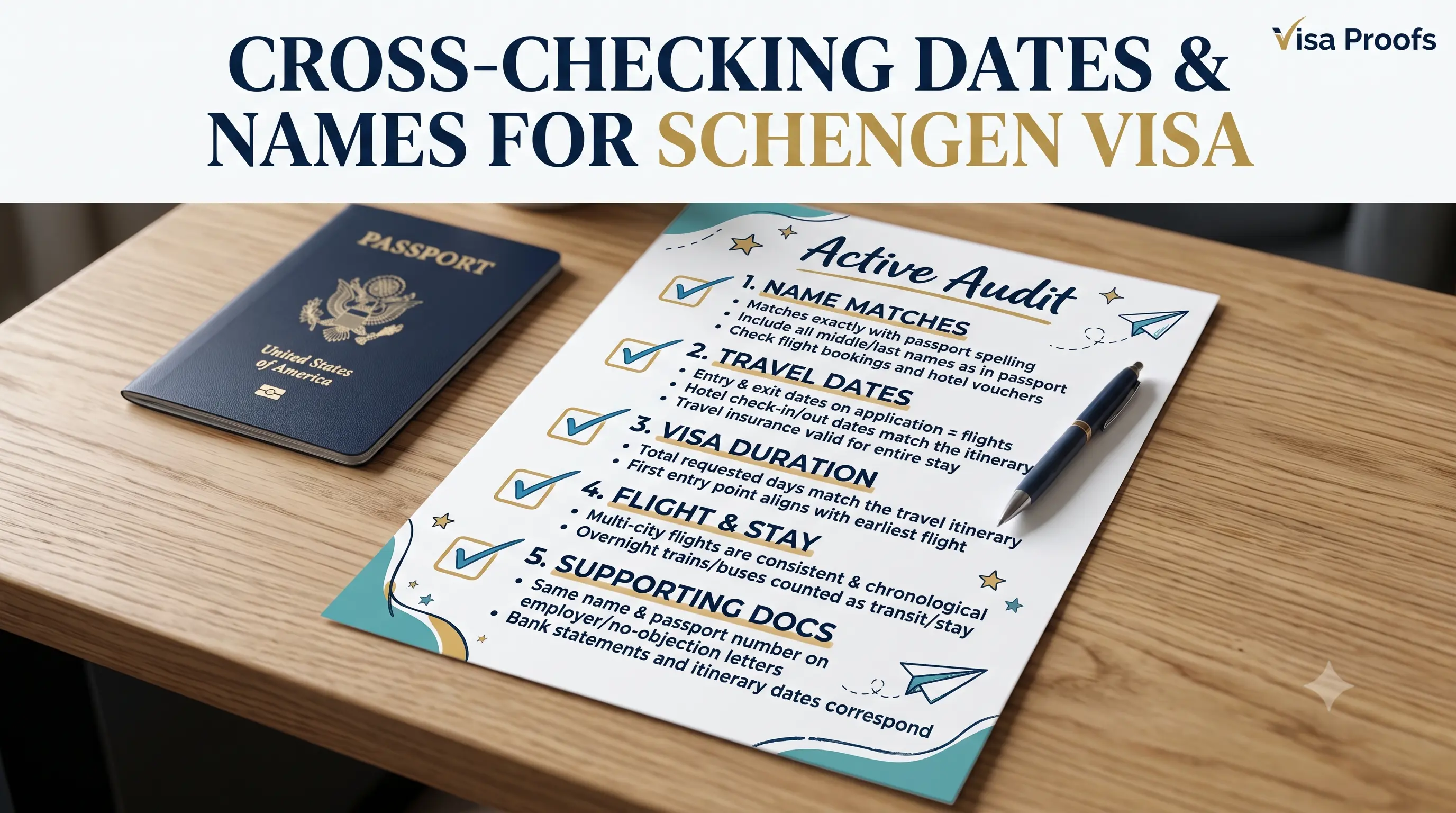
- Cross-check everything. Dates, names and cities should match across your form, flights, accommodation and insurance.
A Simple Day-by-Day Example
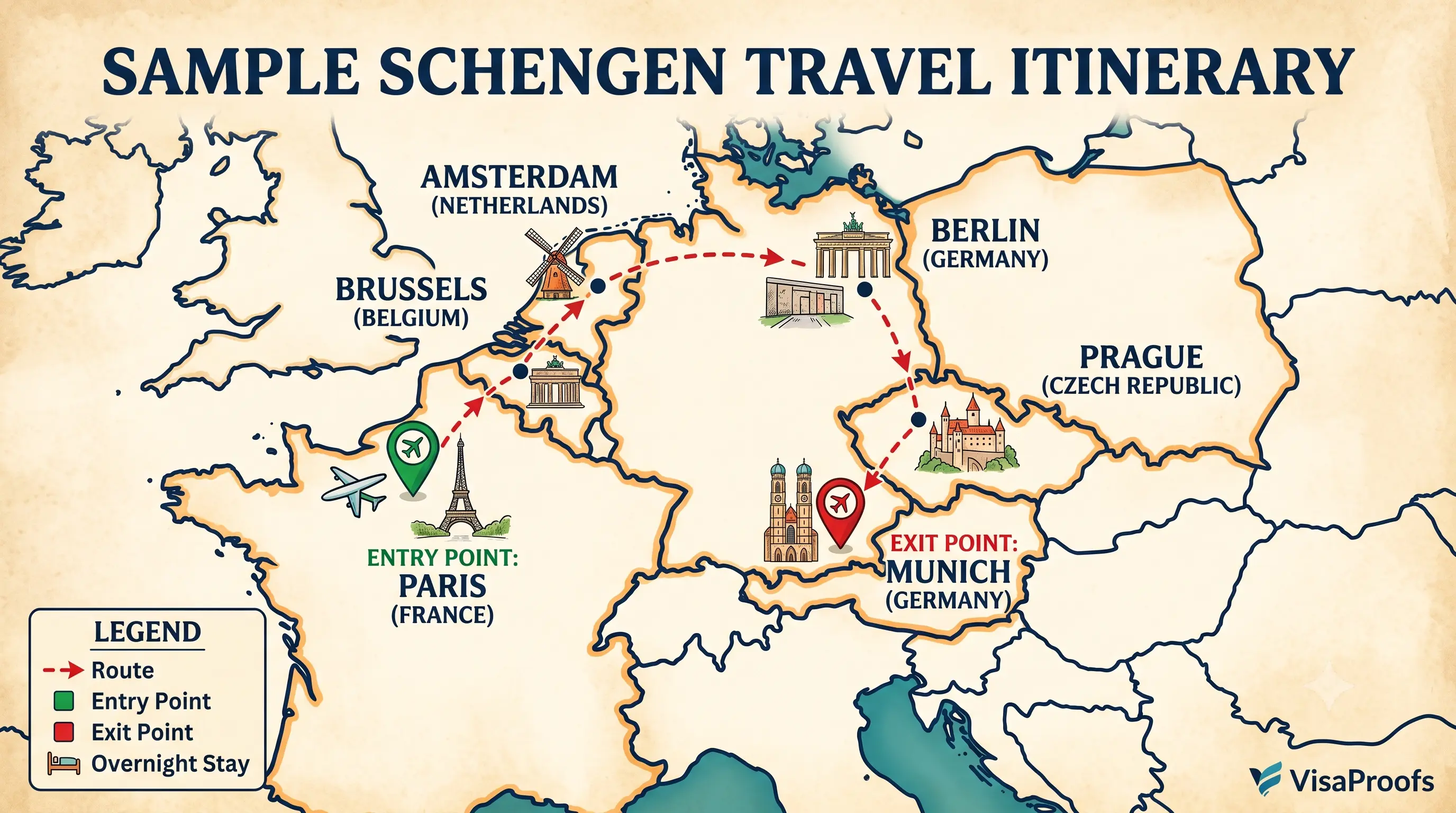
This is an illustration of the layout only. Your own plan should reflect where you actually intend to go.
| Days | City | Stay | Plan |
|---|---|---|---|
| 1 to 4 | Paris, France | Hotel, 4 nights | Arrival, museums, city walking tours |
| 5 to 7 | Amsterdam, Netherlands | Hotel, 3 nights | Canal tour, galleries, day trip |
| 8 to 9 | Berlin, Germany | Hotel, 2 nights | Historic sites, markets |
| 10 | Berlin, Germany | — | Departure flight home |
In this example France has the most nights, so France would generally be the main destination. For more on how the flight leg fits, see our Schengen flight itinerary guide and our article on the return flight itinerary for a visa.
Mistakes That Cause Problems
- Dates in the itinerary that differ from the dates on the application form
- Accommodation that does not cover the whole stay, with no explanation
- A route that does not match the country you applied through
- Names spelled differently across documents
- An exit date that falls outside the stay you requested
- Over-planning: dozens of bookings you cannot afford to lose if the visa is refused
Keeping Within the 90/180-Day Rule
The 180-day period starts when you first enter the Schengen area, and you can stay for a total of 90 days within it. If you have travelled to Schengen countries recently, count those days before you plan a long trip. The European Commission offers a short-stay calculator for this.
Where VisaProofs Fits In
VisaProofs provides the flight part of your itinerary. Your accommodation, insurance and day-by-day plan come from you and your providers, and your consulate decides what it accepts. Have a look at our homepage for how the process works, our guides library for more country and document advice, or our flight itinerary for visa application guide for the general version.
Frequently Asked Questions
Do I need a day-by-day plan for a Schengen visa?
Not every consulate asks for one, but it is a common supporting document, especially for longer trips or trips through several countries. Check your consulate's checklist, and prepare one if you are unsure.
How is a Schengen visa itinerary different from a flight itinerary?
The flight itinerary only covers your entry and exit flights. The wider travel itinerary also covers where you will stay and what you plan to do. The flight document is one part of it.
Which country should I apply to if I am visiting several?
Generally the country where you will spend the most nights. If your time is split equally, it is generally the country you enter first. Your consulate's guidance takes priority.
Should my accommodation cover the whole trip?
Requirements vary, so cover the full stay unless your consulate says otherwise. Bookings you can cancel without charge are a lower-risk choice while your visa decision is pending.
Can I change my plans after the visa is issued?
Your visa is issued for specific dates, but you can usually adjust your plans within them. You must leave the Schengen area before your permitted stay ends. For questions about your own order, visit our FAQ page or contact Support.
Add the flight part of your Schengen itinerary in minutes.
Written by VisaProofs Team
Experts in verified flight itinerary documentation, embassy compliance, and onward-travel paperwork.